The Language of Flowers: Inside the Intuitive World of “The Flower Doctor”

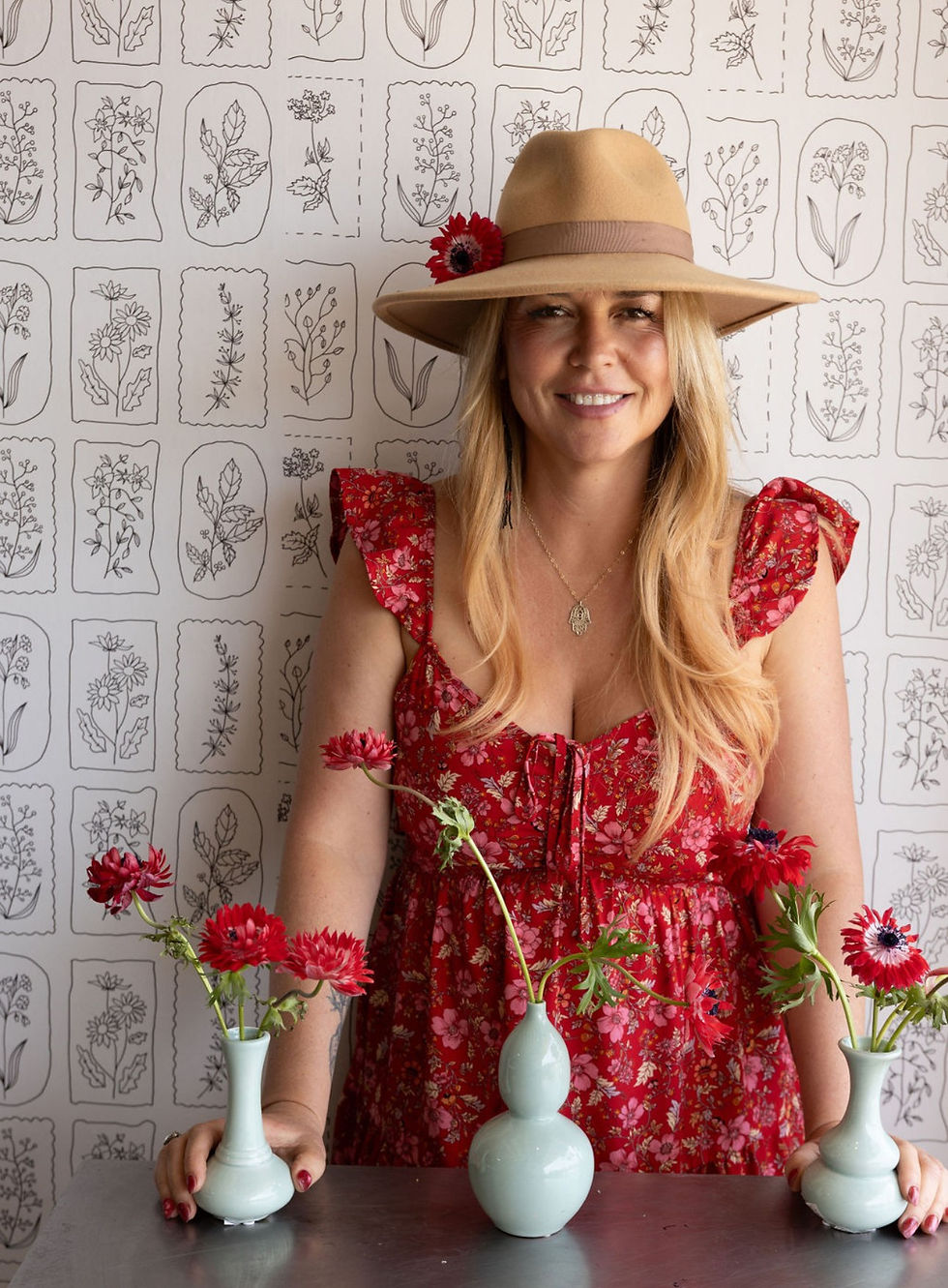
There are florists who arrange, and then there are those who translate. In a quiet yet powerful corner of the wellness and design world, one woman has built a life’s work on the belief that flowers are not simply decorative, but deeply expressive. Known as “The Flower Doctor,” her work moves beyond aesthetics into something far more personal, emotional, and, at times, transformative.

Her story begins not in a studio, but in a garden. As a child, she would spend hours barefoot among the flowers, feeling an unspoken connection to them. They weren’t just beautiful to her. They carried a presence, a kind of quiet communication that didn’t need words. That early instinct stayed with her, eventually shaping a career rooted as much in intuition as in design.
Today, that instinct has evolved into what she describes as “flower energy.” It’s the idea that flowers influence how we feel on an emotional level. You don’t have to study it or even believe in it. You notice it the moment you walk into a room filled with fresh blooms, and something inside you shifts. There’s a softness, a calm, a subtle lift that’s hard to explain but impossible to ignore.
What sets her apart is the way she listens. Clients don’t come in asking for arrangements alone. They arrive with stories, often carrying emotions they can’t fully articulate. Her role is to interpret what they’re feeling and translate it into something tangible. A kind of floral language. Calming blooms for anxiety. Structured, bold stems for strength. Soft, open petals for connection and love.
It’s a practice that sits somewhere between artistry and emotional insight.
One of her earliest defining moments came as a teenager, when she was asked to step in and create a last-minute bridal bouquet. With little time and no room for hesitation, she worked on instinct. The result wasn’t just a finished arrangement, but a visible shift in the bride herself. What had been panic quickly settled into calm. That moment stayed with her. It wasn’t about the flowers alone. It was about what they could do.
Over the years, she’s witnessed that same transformation again and again. People arrive overwhelmed, grieving, uncertain, or simply searching for the right way to express something deeply personal. The flowers become a bridge. A way to communicate when words fall short.
Her creative process reflects that philosophy. She doesn’t begin with color palettes or structure. She begins with feeling. What does this person need in this moment? Once that’s clear, the design follows naturally. The result is work that resonates on a deeper level. It doesn’t just look beautiful. It feels intentional.
That perspective has expanded into her writing as well. Through her work, she’s begun to articulate something that has always been instinctive, giving people a way to understand and experience it for themselves. It’s less about instruction and more about awareness. Learning to notice how something as simple as flowers can influence mood, energy, and connection.
It’s also part of a larger shift. In a world that moves quickly and rarely pauses, people are craving something real. Something grounding. Flowers offer that. They require presence. They remind you to slow down, even if just for a moment.
At home, she carries that same intention into her daily life. Fresh flowers are always nearby, not as decoration, but as a way of staying connected. Nature isn’t something separate from her work. It’s woven into how she lives.

And at the center of it all is the rose. Not for its perfection, but for its honesty. From its thorns to its bloom to its inevitable fading, it reflects the full spectrum of human experience. It’s layered, evolving, and real. For her, it represents the heart in all its complexity.
Looking ahead, her vision continues to grow. More ways to share this philosophy, more opportunities to bring it into people’s everyday lives. But the essence remains the same.
To create a connection. To hold space. To remind people that even the smallest details can carry meaning.
Because sometimes, the simplest gesture, a single stem, a thoughtful arrangement can say everything that words cannot.


