Michelle & Barb: Where Stillness Becomes Strength


Your story together is deeply personal. What moment first made you realize your individual healing journeys were meant to become a shared mission?
For us, it wasn’t one defining moment, it was a lifetime in the making.
For over 40 years, Barb has been on a personal journey of healing, mindfulness, and inner work. Long before this became our shared mission, it was simply the way she lived her life. And as her daughter, Michelle grew up inside of that, watching, learning, and experiencing it firsthand.
Some of Michelle’s earliest memories are of sitting together in the mornings, reflecting, setting intentions for the day, and grounding before life began. At the time, it didn’t feel like something extraordinary, it was just what we did. But those small, consistent moments became the foundation for everything.

As Michelle grew older, pursued writing, and found her own voice, she began to recognize just how impactful those early experiences were. After spending years living in Chicago and New York, she felt a pull to come home and create something meaningful. At the same time, Barb’s decades of work were continuing to expand and reach more people.
That’s when it became clear this wasn’t just one of our paths. It was something we were meant to do together.
What made us realize this was a shared mission was the understanding that we had been living the same message across two generations. Barb, through decades of practice and lived experience, and Michelle, through growing up within it and translating it into modern, everyday life.
Together, we saw an opportunity to bridge that gap and show that these tools aren’t just something you discover later in life, but something you can live, model, and pass on.
What started as a personal journey became a shared purpose: to help others feel more grounded, supported, and empowered in their everyday lives. When we founded Peaceful Mind Peaceful Life in 2014, it was rooted in that same intention, and today, we have reached and supported millions of people around the world through our programs, content, and community.

Barb, you’ve spoken openly about overcoming addiction in your family and your own struggles with bulimia. What gave you the courage to begin your healing journey?
The courage didn’t come all at once, but in small, honest moments where I could no longer ignore how much I was suffering. Living with bulimia and being surrounded by addiction in my family, I often felt exhausted, disconnected, and out of control.
Eventually, I reached a point where I knew I couldn’t do it alone, and listened to the voice inside me that told me I needed help; I made the decision to check myself into treatment.
What I’ve come to understand is that healing didn’t begin and end there. Treatment opened the door, but the real work has been a lifelong practice. It’s been about showing up for myself every day, learning to sit with my thoughts and emotions instead of running from them, and slowly rebuilding trust within myself. One of the most important truths I’ve learned, and now teach, is that you can’t control the external world, but you can 100% manage how you respond. That mindset has been essential to my healing.
Michelle, you grew up witnessing your mother’s transformation. How did that experience shape your understanding of resilience and emotional well-being?
Some of my earliest and most vivid memories are of sitting at the kitchen table with my mom before school, taking a few moments to read something inspirational, reflect, and set the tone for the day. Life around us often felt busy, chaotic, and uncertain, like it does for so many people, but those small, grounding moments gave me a sense of peace and stability that stayed with me.

Watching my mom’s journey taught me that resilience isn’t about avoiding hard things, it's about how you meet them. I learned from my mom that we can’t control what happens in the world around us, but we can control how we respond. That perspective has shaped everything for me. It’s given me a sense of confidence and inner resolve, knowing that no matter what life brings, I can handle it.
Those daily practices, such as mindfulness, reflection, and starting the day from a centered place, became the foundation for how I navigate my own life. They’ve carried me through difficult moments, challenges, and uncertainty, and they continue to guide me today.
Healing across generations is a powerful theme in your work. What have you both learned about breaking generational patterns together?
Cycle breaking has taught us that awareness is where everything begins. It takes effort, time, and honest communication. We’re not perfect, but we learn every day.
We’ve learned that patterns don’t break through blame, they shift through compassion, understanding, and a willingness to do things differently. Barb brings a foundation of mindfulness and presence, while Michelle brings a modern lens on today’s challenges. Together, we learn from each other in real time.
Healing isn’t always easy, but it’s essential. With the right skills, awareness, and openness to grow, real change across generations is possible, and that’s what we hope to share with others through our podcast Life Happens with Barb and Michelle and our nonprofit Peaceful Mind Peaceful Life.
Working together as a mother-daughter team is unique. How has your relationship evolved since launching Peaceful Mind Peaceful Life?
Working together as a mother and daughter has deepened our relationship in ways we never could have imagined. Since launching Peaceful Mind Peaceful Life, we have grown not just professionally, but personally, learning how to communicate better, respect each other’s individuality, and listen with open hearts.
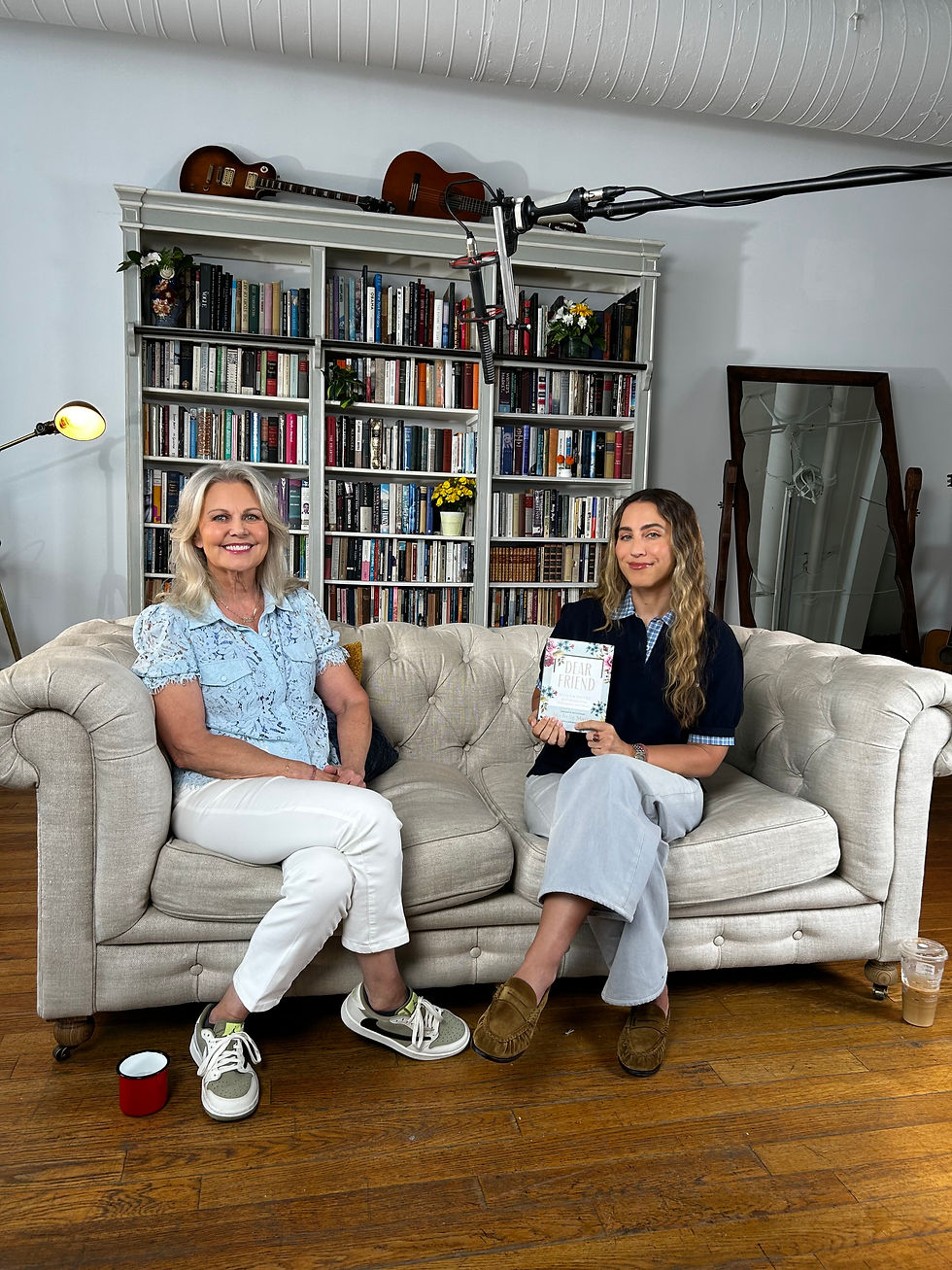
One of the biggest lessons has been the importance of boundaries. In the beginning, there were moments, like work calls on weekends, when we had to learn to separate our roles. Michelle set clear boundaries, which became a turning point in how we work together. It taught us that boundaries are not barriers, they are what allow a relationship to thrive.
Whether it is a mother-daughter relationship or any workplace dynamic, boundaries are essential for long-term success. It is a skill we actively practice and one we teach others, because protecting your time, energy, and emotional well-being is foundational to building healthy, sustainable relationships.
At its core, this journey has strengthened our trust, respect, and love and allowed us to build something meaningful together that reflects both our voices.
What strengths do each of you bring to the partnership that make your collaboration so impactful?
What makes our partnership so impactful is the balance we bring to each other.
Barb brings depth, wisdom, and a lifelong commitment to mindfulness and inner work. She has a grounded presence and an ability to simplify complex emotions into practices people can actually live by. Her perspective is rooted in experience, resilience, and a deep understanding of what it means to find peace from within.
Michelle brings relatability, modern perspective, and a natural ability to translate those teachings into everyday life. She understands how today’s world moves, especially for younger generations, and ensures our work feels accessible, relevant, and real. She turns insight into connection.
Together, we meet people where they are. We blend real-life experience with evolution, wisdom with practicality, and intention with action. That combination allows us to not only share tools but to truly connect with people in a way that feels both timeless and current.
When you disagree or approach challenges differently, how do you navigate those moments while staying aligned in your mission?
When we disagree or approach challenges differently, we come back to the tools we’ve practiced for years. One we use often is the HALT method from Michelle’s Dear Friend, pausing to ask if we’re hungry, angry, lonely, or tired before reacting. That simple check-in helps us respond with awareness instead of emotion.
We’ve learned to pause, reflect, and return to the conversation with greater clarity and compassion. We don’t always get it perfect, but we stay grounded in our shared intention: to support each other and the work we’re doing.
At the end of the day, it’s not about avoiding disagreement, it’s about how we move through it with respect, communication, and a commitment to growth. That’s what keeps us aligned in both our relationship and our mission.
Barb, you’ve practiced mindfulness for more than 40 years. What is one simple practice anyone can start today to cultivate more peace in their life?
One of the simplest and most powerful practices anyone can start today is pausing and taking one or two intentional breaths.
You can do this anywhere, at any time, before a difficult conversation, walking into a meeting, sitting at a red light, or in a moment when you feel overwhelmed. Just pause, take a slow breath in, and gently exhale. Even one or two breaths can help regulate your nervous system, calm your mind, and create a moment of space before you respond.
I’ve learned to use this practice in some of the hardest moments, and also in the simplest ones. It’s always available to you. Peace isn’t something you have to search for, it’s something you can return to, one breath at a time.
Michelle, your book Dear Friend focuses on self-worth and emotional resilience. Why do you think so many people struggle with these concepts today?
I think so many people struggle with self-worth and emotional resilience today because we’re constantly being pulled outside of ourselves. We’re living in a world of comparison, pressure, and overwhelm, and it’s easy to start believing our worth is based on how we perform, how we look, or how others respond to us.
Dear Friend really started as a note to myself. It was a way to process my thoughts, ground myself, and return to what I needed to hear on hard days. Over time, those notes became a practice, something I returned to daily to reconnect, reflect, and reset.
The purpose of the book is to offer that same experience to others. It’s not about perfection or having it all figured out. It’s about creating a consistent, supportive relationship with yourself. Through simple, daily reflections and reminders, it helps people slow down, understand their emotions, and build trust within themselves.
Because at the end of the day, self-worth and resilience aren’t things we find once. They’re things we practice. And sometimes, all it takes is one small, honest moment with yourself to begin.
In today’s fast-paced digital world, what do you think is the biggest obstacle preventing people from experiencing inner peace?
In today’s world, one of the biggest obstacles to inner peace is our disconnection from ourselves. We’re constantly looking outward for validation, comparison, and answers through social media, the news, and endless noise. That constant input keeps us in a reactive state, making it hard to slow down, tune in, and actually hear ourselves.
One of Barb’s greatest lessons, and something we teach every day, is that you can’t control the external world, but you can 100% control how you respond to it. That shift is everything. Inner peace begins when we turn inward and take responsibility for our thoughts, reactions, and energy, but most people haven’t been taught how to do so.
Your work emphasizes that inner peace is a skill that can be learned. What are the first steps someone can take when they feel overwhelmed or stuck?
The first step is to pause. Even one or two intentional breaths can create space between you and what you’re feeling. From there, begin to notice what’s coming up without judgment. Ask yourself, “What do I need right now?” Simple tools like breathing, journaling, or even stepping away for a few minutes help regulate your nervous system and bring you back to the present moment. Small, consistent shifts are what create lasting change.
Together, your message now reaches millions around the world. What has surprised you most about how people respond to your work?
What has surprised us most is just how deeply people resonate with the simplicity of the message. We’re still in awe that this work reaches millions of people around the world, it means so much to us. At the heart of it, it’s not complicated. It’s the reminder to slow down, feel your feelings, and take care of yourself, but it’s something so many people are truly craving.
We constantly hear that people feel seen, understood, and less alone, and that has been incredibly meaningful. It reinforces why we do this. This is more than work for us. It’s our life’s mission rooted in humanity and helping others. We’re committed to meeting people where they are, offering simple, practical tools that support them in their everyday lives.
Through your podcast Life Happens with Barb & Michelle, you’ve had countless honest conversations about life’s challenges. What topics seem to resonate most with your audience?
What resonates most on our show are the real, human experiences that people don’t always feel comfortable talking about out loud. What makes our conversations unique is that we share from our own lives.
Some of our most popular episodes touch on grief, difficult relationships, and navigating toxic dynamics, but we cover so much more. Grief, in particular, deeply resonates. Michelle lost her father at a young age, and that experience continues to shape how she understands loss, resilience, and healing. We also talk openly about feeling disrespected, relationship challenges, and navigating difficult dynamics, with Barb sharing her own experiences with divorce and the emotional journey that comes with it.
At the core of our message is the understanding that life is difficult. There is a lot of messiness and uncertainty, and everything in between. Our work is about helping people navigate those moments with more awareness, compassion, and practical tools.
Our audience connects most because they can feel that we’re not just teaching. We’re living it alongside them. It’s not about having perfect answers. It’s about being honest, creating space for these conversations, and reminding people that what they’re going through is normal, and that they’re not alone.
Many leaders and organizations are now prioritizing mindfulness. Why do you believe emotional intelligence is becoming such a critical skill in the workplace?
Because work is no longer just about output, it’s about people. We’re navigating
constant change, pressure, and uncertainty, and without emotional awareness, it’s easy to react, miscommunicate, or burn out. Emotional intelligence and awareness allow people to pause, respond thoughtfully, and lead with clarity and empathy. It creates healthier teams, better decisions, and more sustainable success. At the end of the day, the most effective leaders aren’t just smart, they’re self-aware.
Barb, in your bestselling book The Practice, you share simple tools for managing stress and finding balance. Which practice has personally been the most transformative in your life?
The most transformative part of The Practice is the consistency of returning to it throughout the day. It’s not just one moment, it’s a way of living.
The Practice is built around three simple yet powerful steps: waking up with intention, living in the present throughout the day, and letting go at the end of it. It begins in the morning by going within and setting the tone, then continues, moment by moment, by bringing your awareness back to the present, and closes by releasing what you’re holding on to.
What changed my life is learning that peace isn’t something you find once. It’s something you choose and return to again and again. The Practice trains you to notice when the mind is creating stress, fear, or doubt, and gently guide yourself back to your inner source of calm.
Over time, this daily rhythm has helped me move through life with more patience, clarity, and compassion. It’s given me the tools to face challenges with courage, let go of what I can’t control, and experience a deeper sense of wholeness, no matter what’s happening around me.
Michelle, when writing Dear Friend, what message did you most hope readers would carry with them long after finishing the book?
My biggest hope was that readers would walk away feeling like they had someone in their corner, and that over time, they could become that person for themselves. At its core, it’s about self-love as a daily practice, not something you wait to feel.
This book came from my own experiences of learning to take a moment each day to check in, set intentions, and reconnect with myself. Starting my day this way, something my mom and I have practiced together for years, has helped me navigate challenges with more clarity and compassion.
I want readers to know they are not alone, and that even one small, intentional moment each day can shift how they feel and how they show up. Dear Friend is meant to be a simple, practical tool they can return to again and again, a way to build self-trust, support themselves, and move through life with more ease.
Your work often emphasizes that healing ourselves helps heal the world. What does that idea look like in action in everyday life?
It looks like how we show up in the small, everyday moments. When you take responsibility for your thoughts, your reactions, and your energy, it changes everything. You become less reactive, more patient, more compassionate with yourself and with others. That shift impacts your relationships, your family, your workplace, and your community. Healing isn’t just personal, it’s a ripple effect. When we choose awareness over reaction, we’re contributing to a more peaceful world in very real ways.
What role do you believe mindfulness and emotional awareness will play in shaping the next generation?
They’re essential. The next generation is growing up in a fast-paced, overstimulated world, constantly absorbing information from social media and digital spaces, which can lead to heightened stress and overwhelm at a very young age.
Mindfulness and emotional awareness are critical because they give young people the tools to manage that stress, reduce anxiety, and create space between what they experience and how they respond. And from that space, they begin to build confidence, resilience, and self-trust.
When young people learn how to go inward instead of constantly looking outward, it changes everything, how they handle pressure, how they connect with others, and how they move through life with more clarity and strength.
If you could change one thing about how society approaches mental health and emotional well-being, what would it be?
If we could change one thing, it would be to create true acceptance around mental and emotional well-being. To remove the stigma and make it just as important and as normal as physical health.
We would prioritize education early on, giving people the tools to understand their emotions, manage stress, and support themselves in everyday life. Mental and emotional well-being shouldn’t be something we only focus on when things feel overwhelming. It should be part of how we live every day.
When we normalize these conversations and make these tools accessible, we empower people to take care of themselves in a more compassionate, proactive way.
Looking ahead, what is the legacy you hope to create together through your work and message?
The legacy we hope to create is one of real, lasting impact and changing how people show up in their own lives.
We want to help people feel more at peace within themselves, more confident in who they are, and more equipped to navigate life’s challenges. If our work can help someone pause instead of react, move through a difficult moment with more compassion, or feel less alone, that’s everything to us.
At its core, our legacy is about changing lives in simple, meaningful ways and creating a ripple effect where that change extends beyond the individual to families, communities, and future generations.


