Perse: A New Chapter for Persian Cuisine in Los Angeles


In the heart of Brentwood, Perse brings Persian culture, contemporary design, and centuries of culinary tradition together for a distinctly modern Los Angeles dining experience.
Los Angeles has long been home to one of the most vibrant Persian communities outside Iran, with generations of families bringing their culinary traditions, hospitality, and culture to Southern California. Yet for many diners, Persian cuisine remains defined by only a small collection of familiar dishes.
Perse wants to expand that conversation.
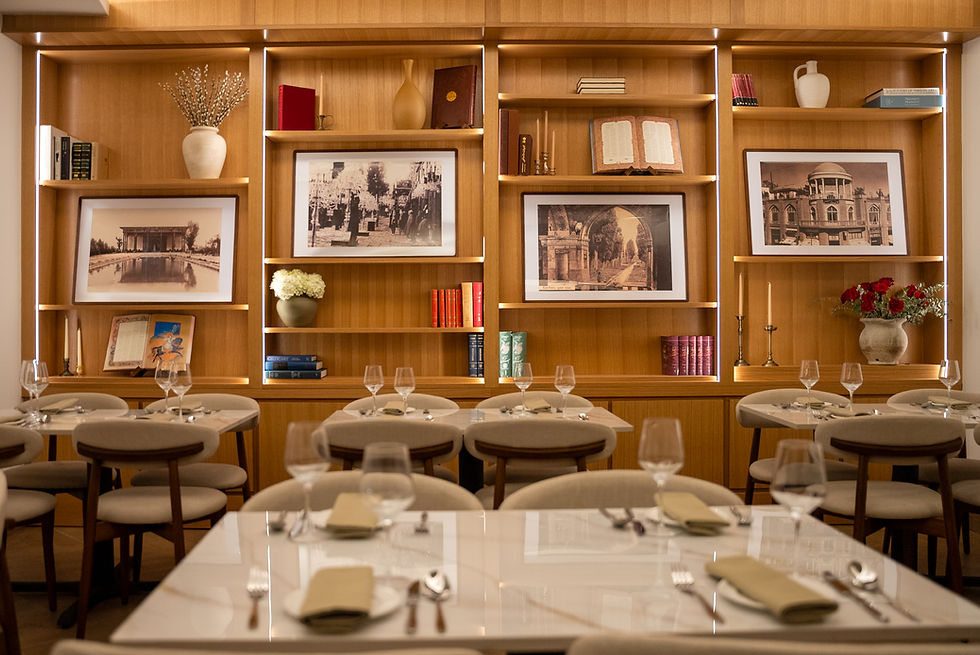
Located in Brentwood, the restaurant presents Persian cuisine through a contemporary lens while remaining firmly connected to the flavors, traditions, and memories that have shaped it for generations. The experience goes beyond the plate. Art, architecture, music, cocktails, service, and symbolism work together to create a culturally rooted restaurant without feeling overly literal.
At its core, Perse shows guests how broad, sophisticated, and diverse the Persian table can be.
A Different View of Persian Cuisine
Perse was inspired by a simple observation: Persian cuisine has far more to say than many diners outside the culture have had the chance to experience.
Iran's geography has created a culinary landscape of remarkable variety. Northern regions near the Caspian Sea bring their own ingredients and traditions, while southern Iran offers an entirely different culinary personality. Herbs, walnuts, pomegranate, citrus, seafood, smoked flavors, pickled vegetables, and fruits cooked alongside savory ingredients all play roles within a cuisine developed across centuries.
Kabobs and rice remain beloved parts of that tradition, but at Perse they appear as chapters in a much larger story.
The kitchen approaches traditional dishes by first identifying the flavors and characteristics that define them. From there, technique, sourcing, and presentation can evolve without disconnecting the dish from its origins.
That distinction matters.
For Persian families, recipes are often deeply personal. The same stew may taste different from one household to another because mothers, grandmothers, and generations of home cooks have adapted recipes. Perse respects those differences rather than attempting to define one version as the definitive interpretation.
The objective is recognition, not replication.
A Persian guest should be able to taste a dish and understand where it came from. Someone discovering Persian cuisine for the first time should simply have a memorable experience.
From Tehran to Los Angeles
Perse's story is also deeply connected to the people behind it.
Farinaz “Naz” Pirshirazi and her brother, Farbod Pirshirazi, grew up in Tehran before moving to the United States in 2013. Their path into hospitality wasn't conventional. Neither originally came from a restaurant background, giving them an outsider's perspective as they entered the business and learned it firsthand.
Their earlier restaurant, Toranj in Westwood, laid the foundation for what would eventually become Perse.
There, they discovered how emotionally connected Persian diners can be to the food they grew up eating. A particular aroma, texture, or flavor could instantly bring back childhood, family gatherings, or a grandmother's kitchen. They also saw how receptive non-Persian diners could be when unfamiliar dishes came with context and storytelling.
Those lessons became central to Perse.
Naz's involvement spans the guest experience, menu development, design, branding, service, and marketing, while Farbod brings a complementary focus on operations and the business. Together, they developed the restaurant through perspectives spanning hospitality, culture, food, design, and business.
Tradition, Refined
Persian cooking gives Perse an extraordinary range of ingredients to explore.
Saffron, rose water, pomegranate, walnuts, pistachios, sour cherry, herbs, and citrus can be unmistakably Persian, but the restaurant uses them selectively rather than treating them as decorative signatures.
Saffron might appear in rice, dessert, a sauce, or a cocktail. Pomegranate can provide acidity and sweetness. Herbs bring freshness and dimension. Nuts add richness and texture.
An interesting paradox underlies the idea of “modernizing” Persian cuisine. Many qualities celebrated in contemporary cooking, including bright acidity, abundant herbs, fermentation, fruit paired with savory ingredients, and the interplay between sweet and sour, have been present in Persian kitchens for centuries.
Perse is therefore less concerned with making Persian food modern than with showing diners how sophisticated it has always been.
Ingredient quality plays an equally important role. The restaurant is 100 percent seed-oil free, using extra virgin olive oil, butter, and house-made ghee, while emphasizing the sourcing of its meat, fish, produce, herbs, spices, and saffron.
The result is refinement without unnecessary complication.
Art That Speaks Quietly
The visual experience at Perse follows much the same philosophy as the kitchen.
Rather than filling the restaurant with obvious cultural references, the design subtly draws on Persian architecture, mythology, gardens, patterns, and nature.
Greens, golds and warm neutral tones establish a sophisticated palette. Throughout the space, guests encounter interpretations of symbols that have appeared across Persian culture for centuries.
Among the most significant is the Tree of Life.
A mural incorporates the ancient symbol and its connections to Persian mythology, life, and creation. Other decorative elements reference the architectural heritage of Taq Kasra at Ctesiphon, bringing ancient Persian design language into a contemporary Brentwood dining room.
The cypress is another recurring motif.
Long present in Persian gardens, poetry and visual art, the cypress has traditionally carried associations with beauty, endurance and resilience. Perse incorporates it into its logo and throughout the restaurant's details.
Some guests will recognize those references immediately. Others may simply appreciate the artwork and design without knowing the history behind them.
That is precisely the point.
Perse lets culture exist in the room without demanding that every guest understand it before enjoying it.
The Persian Art of Hospitality
Food may introduce guests to Persian culture, but hospitality completes the experience.
In Iranian families, feeding a guest is rarely an obligation. It is generosity made tangible. Guests are encouraged to eat more, stay at the table, and let others care for them.
Perse translates that tradition into restaurant service.
The intention is for staff to do more than take orders and deliver plates. They can guide diners through unfamiliar dishes, explain ingredients, and help guests understand how different elements of a meal connect.
For someone experiencing Persian cuisine for the first time, that hospitality makes discovery feel natural rather than intimidating.
For Persian guests, it can feel wonderfully familiar.

From Lunch to Late Evening
Perse was also conceived as a restaurant guests could experience differently depending on the occasion.
Weekday lunch has a more approachable rhythm suited to Brentwood's neighborhood and business community. Weekend brunch brings a relaxed and social personality, while dinner becomes more immersive as the lighting changes, the pace slows, and cocktails and wine take on a larger role.
Across all three, the foundation remains consistent: Persian flavors, quality ingredients, thoughtful hospitality, and a strong visual identity.
The beverage program extends the kitchen's philosophy into the glass. Ingredients such as saffron, rose, pomegranate, citrus, cucumber, mint, and Persian herbs inspire cocktails and non-alcoholic creations.
Wine brings another dimension. The acidity, herbs, fruit, smoke, sweetness, and richness found throughout Persian cuisine offer intriguing pairing opportunities, turning the beverage program into an extension of the meal rather than a separate attraction.
A Restaurant With a Larger Purpose
Perse's Los Angeles location gives the concept particular significance.
For Iranian Americans, food has often connected generations and two countries. Recipes become living pieces of family history, carrying memories long after families establish new lives thousands of miles from Iran.
That creates a delicate balance for Perse.
Persian diners arrive with their own memories and expectations. They may unconsciously compare a ghormeh sabzi or fesenjoon to the version made at home decades earlier. Meanwhile, diners at the next table may be encountering those flavors for the first time.
Perse does not attempt to choose between those audiences.
Instead, the restaurant tries to create a meeting place for them.
One of the most meaningful expressions of that mission happens when Persian guests bring friends from outside the culture, order dishes for the table, and explain what they mean.
Suddenly, dinner becomes something more.
It becomes an introduction.

Looking Beyond Brentwood
Perse's long-term vision extends beyond the success of one Los Angeles restaurant.
Its founders hope to help create a future in which Persian cuisine holds a more visible place in the international dining conversation. Expansion into other cities, and potentially international markets, is part of that possibility, although the team values preserving the restaurant's cultural identity and attention to detail more than growth for its own sake.
There is also a broader hope that restaurants like Perse can help create space for more Persian chefs, restaurateurs and culinary voices.
Persian cuisine carries thousands of years of history and extraordinary regional diversity, yet much of that story remains unfamiliar to the wider dining world.
Perse isn't trying to rewrite that history.
It is simply presenting it from another angle.
From its dining room above San Vicente Boulevard, overlooking Los Angeles, the restaurant offers guests something increasingly rare: a meal you can enjoy on its own, while quietly inviting you to discover the culture, history, and people behind it.
Perse Restaurant
Website: https://perserestaurant.com/
Cuisine: Refined Persian Cuisine